blog
The Difference Between Being Nice and Being Good
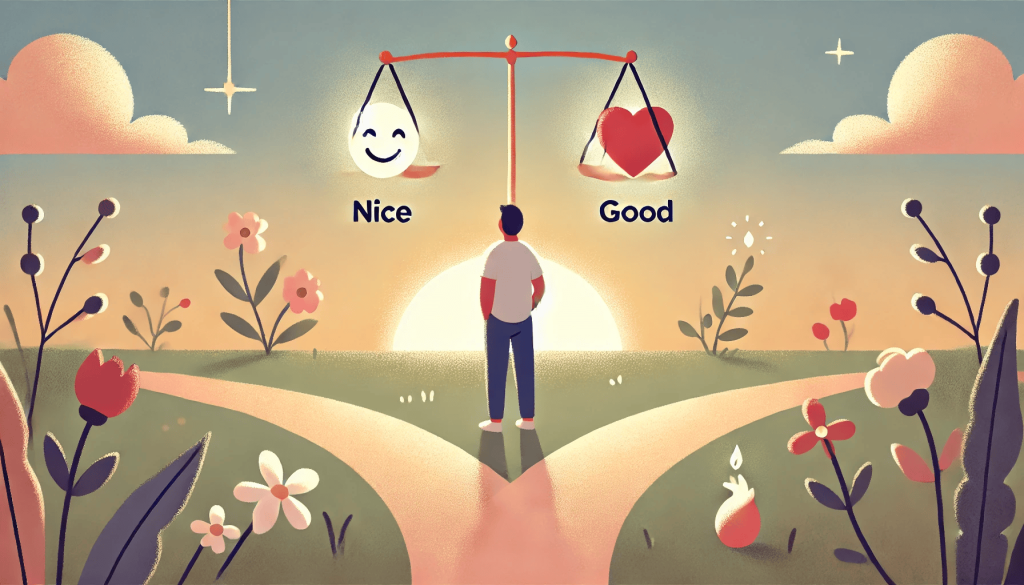
It is common to use the words "nice" and "good" as if they mean the same thing, but in psychology they reflect very different patterns of behaviour. Being nice is often about seeking approval, keeping the peace, and avoiding conflict. Being good is about acting with integrity and aligning behaviour with values, even when that creates discomfort. Recognising the difference matters for our mental health, relationships, and sense of authenticity.
Niceness as social currency
Niceness is usually motivated by the desire to be liked or accepted. It can look like saying yes to requests you do not have the time or energy for, offering praise you do not mean, or avoiding difficult conversations in order to keep interactions smooth. This is not inherently wrong: social harmony can be useful and being considerate is an important social skill. The problem arises when niceness becomes the default mode. If our energy goes into pleasing others at the expense of our own needs, niceness becomes a strategy for approval rather than a genuine expression of care. Over time this can lead to resentment, exhaustion, and a disconnect between how we act and how we feel.
Goodness as values in action
Goodness is different. It is rooted in principles rather than appearances. Being good often requires courage because it is not about being agreeable; it is about doing what is fair, kind, or necessary. Sometimes this means setting boundaries that others may not like, offering honest feedback, or speaking up when something feels wrong. Goodness is aligned with authenticity. It reflects Self-Determination Theory, which highlights that autonomy, competence, and relatedness are core psychological needs. By acting in line with values, we maintain autonomy and foster relationships built on trust rather than compliance. Where niceness seeks to reduce immediate discomfort, goodness invests in long-term wellbeing and integrity.
The psychological cost of niceness
Research into people-pleasing shows a strong link with stress, burnout, and reduced self-esteem. When we prioritise being liked above all else, our identity becomes tied to external approval, and saying no can then feel threatening, as if it risks rejection. This cycle often leads to overcommitment and loss of balance. Many professionals experience this in the workplace, where being the "nice one" means taking on extra work, smoothing over team conflict, or saying yes to tasks outside their scope. While it may earn short-term appreciation, it gradually undermines wellbeing and can even reduce performance. Learning to say no without feeling guilty is one of the most valuable skills for breaking this cycle.
The strength of goodness
Goodness is not about being blunt or unkind. It is about choosing actions that reflect deeper values, even when those choices are less popular. In the workplace, goodness might look like offering constructive feedback that helps a colleague grow, even if it is uncomfortable in the moment. In relationships, it could mean setting clear boundaries around time, energy, or respect, which ultimately strengthens connection rather than eroding it. Acting from goodness creates consistency and trust, because others learn that your actions are guided by integrity rather than by the shifting need to be liked. This consistency is protective for wellbeing: it allows you to act in ways that feel authentic, which is linked to greater life satisfaction and resilience.
Practical ways to shift from nice to good
- Clarify your values: Spend time reflecting on what matters most to you. When faced with a decision, ask if your choice is aligned with those values or driven by the fear of disapproval.
- Practise saying no: Begin with small boundaries, such as declining a meeting you do not need to attend. Each time you say no in a values-consistent way, you strengthen your ability to protect your energy.
- Notice your patterns: Pay attention to situations where you agree to things that feel misaligned. What triggered the urge to be nice? Identifying patterns helps break cycles of automatic compliance.
- Redefine kindness: Being kind does not always mean being agreeable. Sometimes the kindest action is honesty, even when it creates short-term discomfort.
- Balance niceness with goodness: You do not need to abandon niceness. It can play a valuable role in daily interactions. The aim is balance, ensuring that your desire to be liked does not override your need to be real.
Final thoughts
Niceness and goodness are not the same. Niceness prioritises short-term harmony and approval, while goodness prioritises integrity and alignment with values. While niceness can smooth interactions, it often comes at the cost of authenticity and wellbeing. Goodness, though sometimes uncomfortable, builds trust, strengthens relationships, and supports mental health. Choosing to be good rather than just nice is not about being harsh; it is about being real and living in line with what matters most. If you would like to explore these patterns in a supportive setting, our team at Contemporary Psychology in St Kilda is here to help.