blog
How Chronic Stress Changes Your Body, Not Just Your Mood
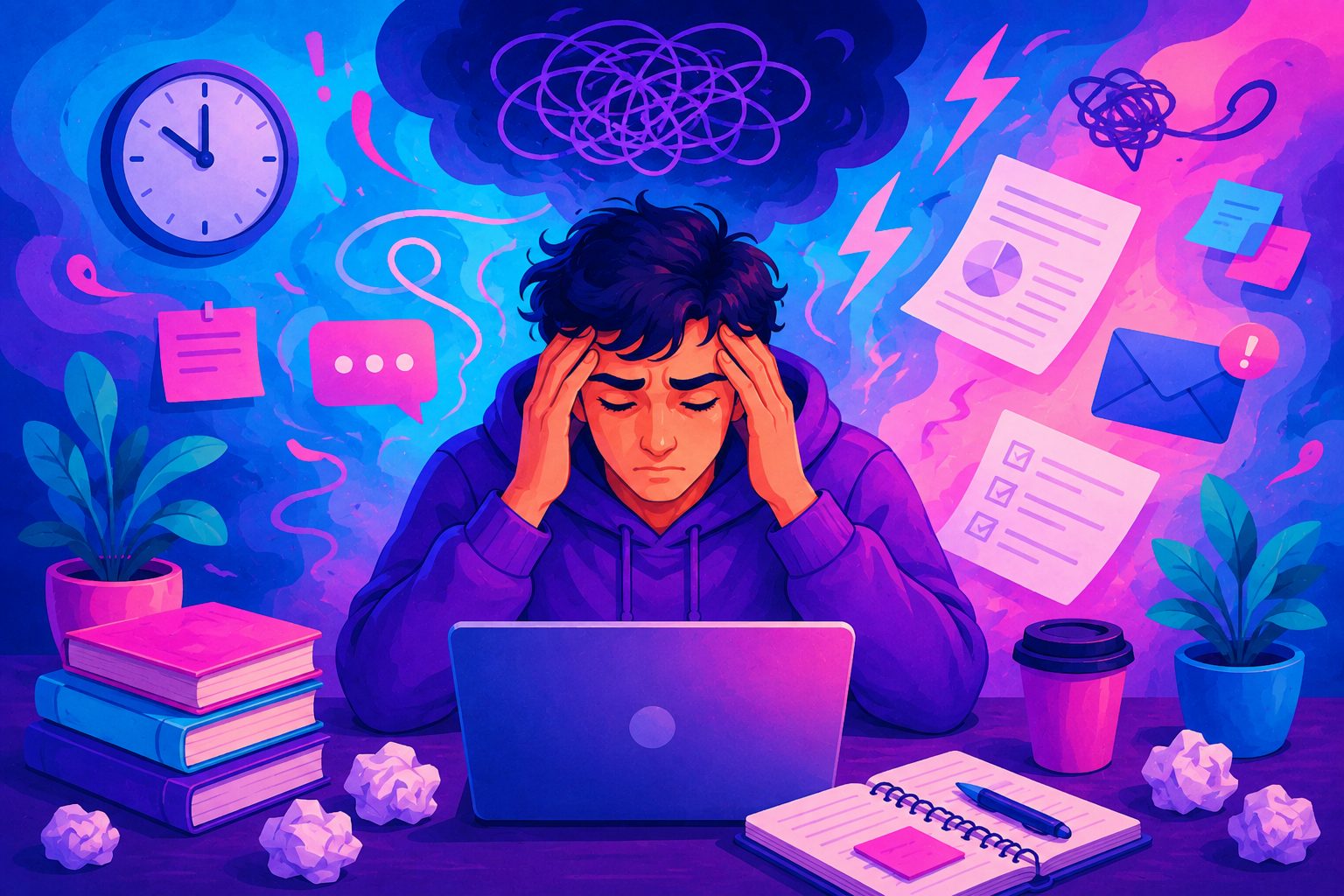
We usually talk about stress as something mental or emotional, something you feel in your mood and your thinking. But chronic stress, the kind that hangs around for weeks or months rather than clearing up after one hard day, affects the whole body. And it often does so in ways people do not link back to stress until the pattern has been running for a long time.
How the stress response is meant to work
Your body's stress response was built for short, immediate threats. When you sense danger, your body releases stress hormones like cortisol and adrenaline. Your heart rate climbs, blood flow shifts toward your muscles, and your focus sharpens, all useful for dealing with a problem right in front of you. Once the threat passes, your body is supposed to settle back down, and the system resets.
Chronic stress gets in the way of that reset. When the pressure does not let up, whether it is work, relationships, money, or something else that drags on, your body can stay switched on for long stretches, without the recovery window it was designed around.
What this can do to the body over time
Staying in that activated state has been linked to a wide range of physical effects. Sleep is one of the first to go, whether that is trouble falling asleep, waking through the night, or sleep that leaves you unrested even after enough hours. Digestion often takes a hit too, with things like nausea, appetite changes, and irritable bowel type symptoms, which makes sense given how closely the nervous system and the gut are connected. Chronic muscle tension is another common sign, especially in the neck, shoulders, and jaw, and it tends to build so gradually that people do not connect it to stress until it has really set in.
Your immune system can be affected as well, with ongoing stress linked to getting sick more often and taking longer to bounce back. Over the longer term, chronic stress is also linked to a higher risk of cardiovascular problems, given the constant load it puts on heart rate and blood pressure.
Why this often gets missed
Because these symptoms show up in the body rather than as an obvious feeling, a lot of people chase them down medically first, sometimes for a long time, before stress is ever considered. This is not a case of it being all in your head. The symptoms are real and physical. Stress is simply one of the genuine things driving them, and dealing with it directly is often part of what is needed for those physical symptoms to actually improve.
What helps settle a chronically activated nervous system
Approaches that work tend to combine two things: easing the sources of the stress, and building your body's ability to return to a calmer baseline. That can include structured relaxation practices, regular physical activity, which has a well-established role in burning off stress hormones and supporting the nervous system, and steady sleep habits, which both support and are supported by better stress regulation.
Just as important is looking squarely at what is generating the stress in the first place, whether that is your workload, a difficult relationship, financial pressure, or something else that keeps going. Managing your body's response on its own rarely resolves stress that has a clear, ongoing cause behind it.
When to seek support
If you are noticing persistent physical symptoms like disrupted sleep, digestive issues, or chronic muscle tension alongside ongoing stress in your life, and they have not improved despite being checked out medically, it is worth considering the part chronic stress might be playing, and talking to a psychologist about it directly.
Your body is telling you something real
Chronic stress is not weakness, and it is not an overreaction. It is a genuine physiological state with real physical consequences, and it responds to the right kind of support. Our team at Contemporary Psychology has experience helping people manage chronic stress, with availability at our St Kilda clinic.