blog
Understanding Depression: Signs, Causes, and When to Seek Help
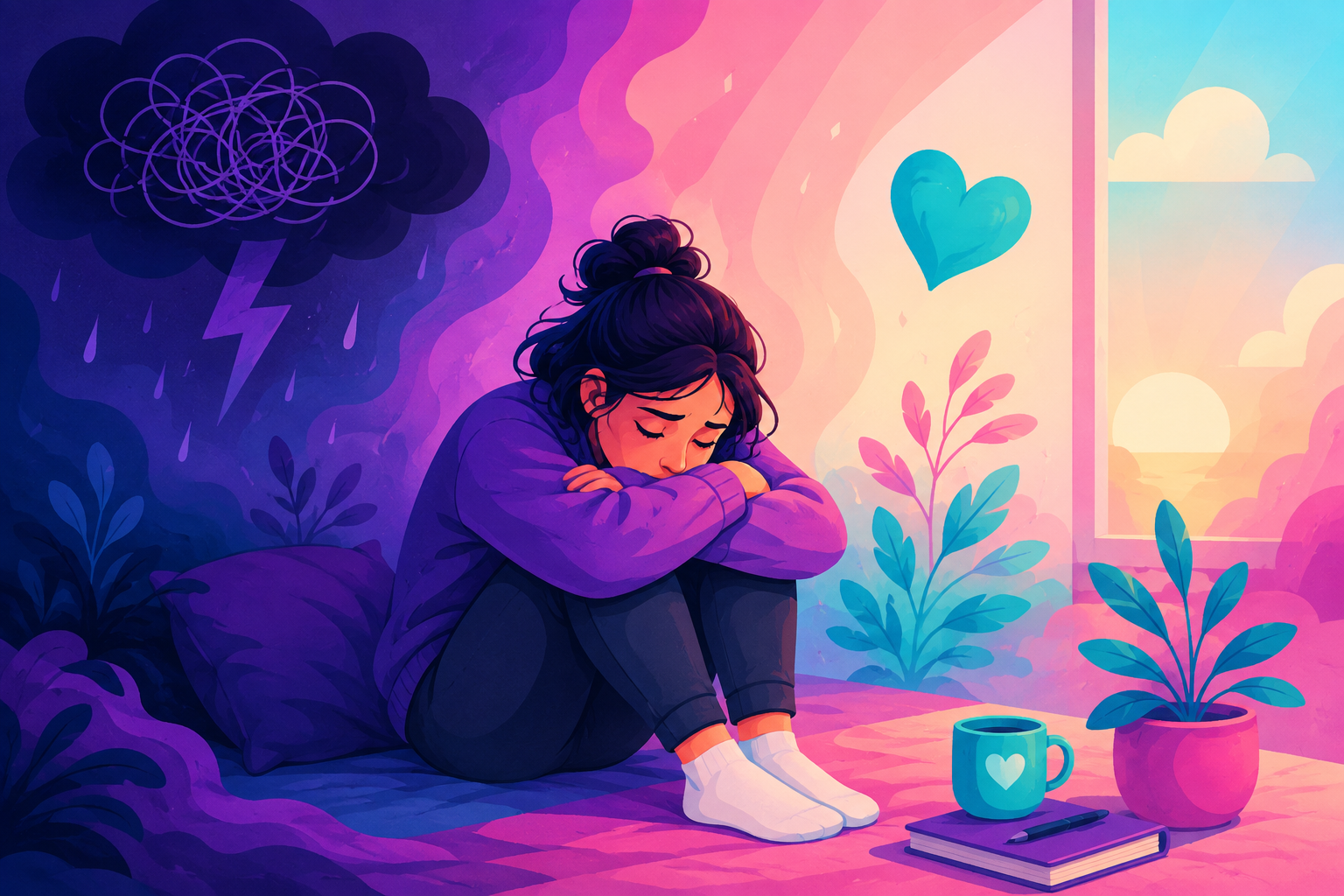
Depression is one of the most common mental health conditions in Australia, and one of the most misunderstood. People often reduce it to "feeling sad", but clinical depression is its own condition, with a recognisable pattern of symptoms, and it affects far more than mood.
What depression actually looks like
Low mood is part of depression, but it is rarely the whole story. Many people lose interest or pleasure in things they used to enjoy. Appetite and weight can change. Sleep goes one of two ways, either too much or too little. Fatigue lingers no matter how much you rest. Concentrating and making decisions gets harder. A heavy sense of worthlessness or guilt can settle in. For some people it feels less like sadness and more like flatness, a kind of numbness where very little feels meaningful.
For a clinical diagnosis, several of these symptoms need to be present most of the day, nearly every day, for at least two weeks, and they need to be clearly affecting daily life. That distinction matters. Everyone has low days. Depression is a sustained pattern, not a passing mood.
What causes depression
Depression rarely comes down to one thing. It usually grows out of a mix of factors. These can include a genetic predisposition, changes in brain chemistry, significant stress or loss, chronic illness, hormonal changes, and long-standing psychological patterns such as harsh self-criticism. For some people it builds slowly with no obvious trigger. For others it follows a clear event, like a bereavement, a relationship ending, burnout, or a big life change.
Because the causes vary so much, good treatment usually needs to work on more than one layer at once. That is part of why self-help, while valuable, often is not enough on its own for moderate to severe depression.
Depression is not a character flaw
One of the most persistent and unhelpful myths is that depression reflects weakness, laziness, or a failure to push through. Depression involves real, measurable changes in how the brain works, including in the areas responsible for motivation, reward, and emotional regulation. Willpower is not the thing that resolves it. Treatment is.
When to seek professional support
If low mood, loss of interest, or a sense of hopelessness has lasted more than two weeks and is getting in the way of work, relationships, or daily life, it is worth speaking with a GP or psychologist. You do not need to wait until things become severe. Getting support earlier usually means a shorter and more manageable course of treatment.
If you are having thoughts of self-harm or feel unsafe, please reach out immediately. Lifeline is available 24 hours a day on 13 11 14, and Beyond Blue can be reached on 1300 22 4636. In an emergency, call 000.
How psychological treatment helps
A psychologist starts with a thorough assessment, to understand the particular shape of your depression and what is likely feeding it, since what works well for one person may not suit another. Evidence-based approaches include cognitive behavioural therapy, which works on the thought patterns and behaviours that keep low mood going, and acceptance and commitment therapy, which focuses on acting on your values even when difficult emotions are present. For some people, treatment also means working alongside a GP or psychiatrist around medication, particularly for moderate to severe depression.
Treatment is not about forcing positivity. It is about understanding what is keeping the depression in place, whether that is a thinking pattern, an avoidance cycle, unresolved grief, or an ongoing stressor, and building a steady path back to functioning and, over time, to a sense of meaning.
You do not have to work it out alone
Depression can make reaching out genuinely hard, especially when it comes with low motivation or a quiet belief that nothing will change. That difficulty is part of the condition, not a sign of what you are capable of. If what you are reading sounds familiar, a conversation with a psychologist is a reasonable and manageable first step. Our team at Contemporary Psychology has experience supporting adults through depression, and can help you understand what is happening and what treatment options are available at our St Kilda clinic.