blog
Functioning, But Not Free, The Hidden Shape of Everyday Addiction
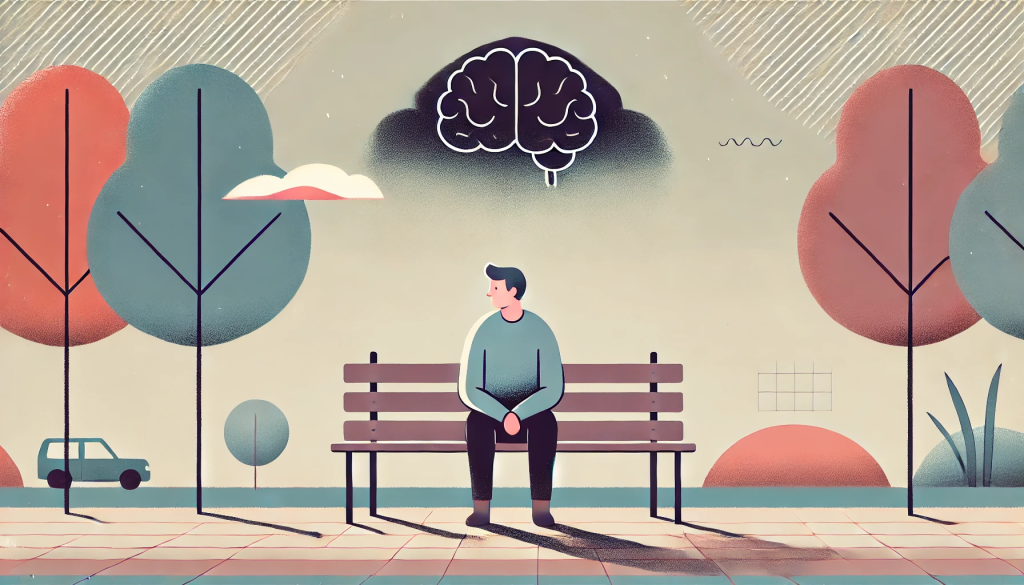
Addiction is often imagined in extremes. It is associated with loss of control, visible consequences, and clear disruption to daily life. But many addictive patterns do not present this way. They sit within otherwise functional lives, often unnoticed, reinforced by routine, and difficult to interrupt. This is where everyday addiction tends to take shape. It does not always remove functioning, but it can quietly limit freedom. Over time, behaviours that once felt optional begin to feel necessary, even when their impact is no longer neutral.
When patterns do not look like a problem
Many forms of addiction operate below the threshold of concern. Work, alcohol, food, technology, exercise, even productivity itself can become patterned in ways that are difficult to step away from. From the outside, these behaviours often appear adaptive: high output and reliability at work, regular social drinking that feels culturally normal, consistent use of devices to stay connected or informed, and structured routines that appear disciplined and controlled. The difficulty is not always in the behaviour itself, but in the relationship to it. A key shift occurs when choice becomes constrained, when stopping, reducing, or changing the behaviour feels effortful or uncomfortable even when there is awareness of its impact. Understanding this is central to the relationship between disconnection and addiction.
The habit loop and how it becomes embedded
At a neurological level, addictive patterns are shaped through learning systems in the brain. Repeated behaviours become encoded in circuits involving the basal ganglia, which support habit formation and automaticity. Over time, behaviours follow a predictable loop: a cue appears, such as stress, boredom, or a specific time of day; a behaviour follows, such as checking a phone, having a drink, or continuing to work; then a short-term shift occurs, often relief, distraction, or a sense of completion. This loop is reinforced through repetition. The brain becomes more efficient at moving from cue to behaviour with less conscious involvement. What begins as a choice gradually becomes automatic. Importantly, the reward is not always pleasure; in many cases it is the removal of discomfort, and relief is a powerful form of reinforcement.
Dopamine and the pull to repeat
Dopamine plays a central role in reinforcing these patterns, but not in the way it is often described. It does not simply create pleasure; it signals anticipation and learning. It increases when something feels rewarding or when an outcome is better than expected. In everyday addiction, dopamine begins to link specific cues with expected relief or reward. Stress becomes linked with the expectation of relief through a behaviour. Boredom becomes linked with stimulation through quick engagement. Completion becomes linked with a sense of closure or control. Over time, the cue itself can trigger a dopaminergic response, creating a sense of pull before the behaviour even occurs. It is not just about liking the behaviour; it is about wanting it.
Why functioning can mask the pattern
One of the reasons everyday addiction goes unnoticed is that it often coexists with high levels of functioning. Responsibilities are met. Roles are maintained. There may be no immediate external consequences. This creates a particular dynamic: the behaviour is justified because things are still working, concerns are minimised because there is no obvious crisis, and change feels unnecessary or premature. At the same time, more subtle internal signals may be present: a sense of reliance on the behaviour to manage mood or energy, difficulty stopping once the behaviour has started, increased frequency or intensity over time, and a quiet awareness that the pattern is becoming less optional. These signals often emerge before external consequences appear.
Stress, regulation, and the role of repetition
Many addictive patterns are closely linked to regulation. They provide a way of shifting internal states, whether that is reducing stress, increasing stimulation, or creating a sense of control. From a brain-based perspective, this involves interaction between the prefrontal cortex and subcortical systems, including the amygdala and reward pathways. Under stress, the brain tends to shift towards more automatic, energy-efficient modes of responding, reducing reliance on deliberate decision-making and increasing reliance on established habits. The prefrontal cortex becomes less dominant under sustained stress, habit circuits become more active, and short-term regulation is prioritised over long-term outcomes. This is why patterns often intensify during periods of pressure or fatigue.
The shift from choice to constraint
A useful way to understand everyday addiction is through the lens of flexibility. In earlier stages, behaviour is flexible: it can be engaged in or stepped away from without significant internal cost. Over time, as reinforcement strengthens, flexibility reduces. This can look like needing the behaviour to unwind or transition between tasks, finding it difficult to tolerate the absence of the behaviour, or continuing despite a sense that it is no longer helping in the same way. The shift is often gradual, and there is rarely a clear point where the behaviour becomes a problem. Instead, the relationship to it changes.
Reintroducing choice
Changing everyday addictive patterns is not simply about removing behaviour. It involves understanding the function the behaviour serves and creating alternative ways to meet that need. From a neuroscience perspective, this means working with the same learning systems that created the pattern: identifying cues that trigger the behaviour, interrupting automatic sequences with small deliberate pauses, introducing alternative responses that provide a similar regulatory effect, and repeating new patterns consistently enough for them to become encoded. This is not about eliminating reward; it is about broadening where reward comes from and restoring flexibility in how needs are met. Understanding the hidden shape of everyday addiction is often the first step toward reclaiming that freedom.
Final thoughts
Everyday addiction rarely draws attention in the way more acute forms do. But over time, it can shape how energy is used, how stress is managed, and how much freedom a person feels in their own behaviour. Understanding the underlying brain processes does not remove the pattern on its own, but it does change how it is approached, allowing for a shift from self-judgement to strategy, and from restriction to flexibility. If you would like to explore these patterns in a confidential, supportive setting, our team at Contemporary Psychology in St Kilda is here to help.